

The Best Stock Market Strategies for 2025: Proven Methods Backed by Data Investing Smarter in...
Read More10 Essential Books on Machine Learning Every Beginner Should Read

Generate Future Leads
From Curiosity to Code: How the Right Machine Learning Books Can Transform Your Understanding of AI
Have you ever wondered how your phone’s camera recognizes faces, or how Spotify seems to predict your next favorite song? The secret lies in the growing universe of machine learning, a branch of artificial intelligence where algorithms learn from data to make decisions that feel almost human. For beginners, diving into this field can feel intimidating. That’s where the right machine learning books come in, they turn confusion into clarity and curiosity into capability.
Today’s world runs on AI machine learning, from self-driving cars and digital assistants to personalized marketing and predictive healthcare. Understanding how machine learning algorithms work isn’t just for tech experts anymore; it’s becoming a fundamental skill for innovators, entrepreneurs, and creative thinkers. Whether you dream of designing intelligent apps, analyzing data, or simply understanding the logic behind the technology shaping our lives, this reading list will guide you through the foundations of this ever-evolving field.
These are not just academic textbooks; they are hands-on machine learning guides that connect theory to practice. Each one is written to help you visualize concepts, build intuition, and experiment confidently.
At Generate Future Leads, our mission is to connect people with knowledge and opportunities that turn learning into action. We believe that education is the bridge between potential and progress, and in the realm of artificial intelligence and machine learning, that bridge begins with understanding.
Let’s explore the 10 essential books every beginner should read to start mastering machine learning, one insightful chapter at a time.
Contents
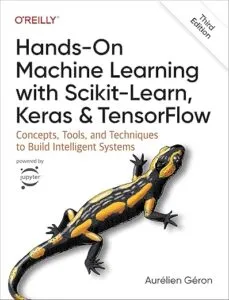
Hands-On Machine Learning with Scikit-Learn, Keras & TensorFlow – Aurélien Géron
Imagine having a mentor who walks you through every step of creating intelligent systems, from data cleaning to neural networks. That’s exactly what Aurélien Géron achieves in Hands-On Machine Learning. Through real-world coding examples and accessible explanations, this book teaches readers how to build and train models using Python’s most popular libraries.
What makes it indispensable is its practical orientation. Instead of abstract theory, you get real applications, from recognizing handwritten digits to predicting housing prices. Géron’s method helps readers develop intuitive understanding, not just memorization. For beginners aiming to see immediate results, this book transforms the intimidating world of machine learning into an exciting playground for experimentation.
Hands-On Machine Learning with Scikit-Learn, Keras, and TensorFlow: Concepts, Tools,...
$46.95
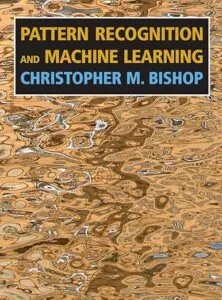
Pattern Recognition and Machine Learning – Christopher M. Bishop
Often referred to as the “Bible” of machine learning, Bishop’s Pattern Recognition and Machine Learning dives deep into the mathematics behind algorithms. It’s ideal for readers who want to understand why models behave as they do, not just how to run them.
Although the content can be challenging, Bishop’s clear structure helps learners move from simple regression models to complex probabilistic reasoning. This book shapes analytical thinking, teaching you to see the “patterns behind the patterns.” It’s the perfect next step once you’re comfortable with hands-on tools and ready to think like a true data scientist.
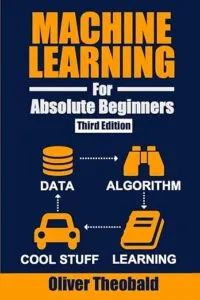
Machine Learning for Absolute Beginners – Oliver Theobald
As the title suggests, this is where your journey might begin. Oliver Theobald’s Machine Learning for Absolute Beginners removes the technical intimidation and speaks in plain English. Using simple analogies and visual diagrams, it explains how machines “learn” from data and improve over time.
It’s perfect for self-learners who want to get a feel for the field without needing a coding background. Theobald covers essential concepts like supervised vs. unsupervised learning, overfitting, and bias in models, all in a conversational, engaging style. After finishing, you’ll have a solid foundation and the confidence to explore more complex material.
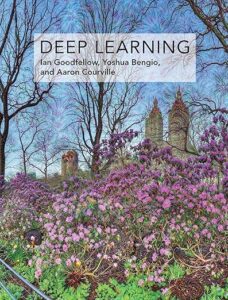
Deep Learning – Ian Goodfellow, Yoshua Bengio & Aaron Courville
For those curious about how AI learns from massive amounts of data, Deep Learning is the gold standard. Written by three pioneers in the field, this book explores the architecture of neural networks, optimization techniques, and the mathematics that fuel modern artificial intelligence.
While it’s academically rigorous, it’s also a thrilling look into the science of human-like learning. Reading it feels like exploring the brain of a machine, understanding how layers of computation gradually form perception and decision-making. It’s a must-read for anyone dreaming of building the next generation of AI systems.
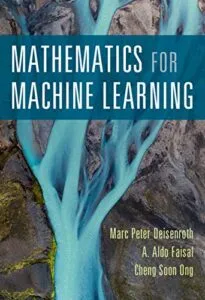
Mathematics for Machine Learning – Marc Peter Deisenroth, A. Aldo Faisal & Cheng Soon Ong
Before mastering algorithms or neural networks, you need to understand the mathematical backbone that powers them. Mathematics for Machine Learning bridges that crucial gap. Written by Deisenroth, Faisal, and Ong, this book gently walks readers through the essential math, from linear algebra and probability to calculus and optimization, all explained through the lens of real-world machine learning applications.
What sets this book apart is its balanced accessibility. It doesn’t drown you in abstract theory; instead, it builds intuition step by step. Each chapter connects concepts directly to practical models, helping you understand why equations matter and how they drive learning algorithms. It’s not just a math textbook, it’s a roadmap that empowers you to read more advanced ML resources with confidence.
For beginners eager to strengthen their analytical foundation, this book transforms complex math into an approachable toolset, one that helps you see the hidden logic beneath every algorithm and understand the structure of intelligence itself.
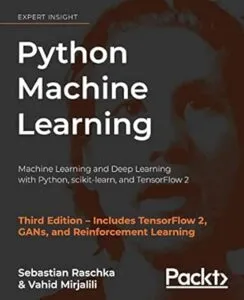
Python Machine Learning – Sebastian Raschka & Vahid Mirjalili
If you prefer learning by doing, Python Machine Learning is your go-to manual. The authors take you through every aspect of the ML pipeline, data preprocessing, feature selection, and model optimization, using real Python code.
Beyond syntax, the book emphasizes why certain approaches work and others don’t. It’s an invaluable companion for developers transitioning into data science roles, blending clean coding practices with analytical depth. By the end, you’ll not only write better code but also understand how your algorithms “think.”
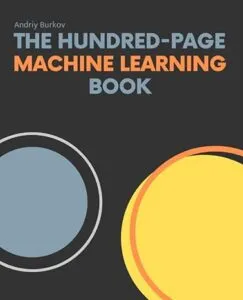
The Hundred-Page Machine Learning Book – Andriy Burkov
Short, sharp, and incredibly useful, Burkov’s The Hundred-Page Machine Learning Book distills the essence of ML theory into concise explanations. It’s perfect for readers who want a comprehensive overview without wading through hundreds of pages.
This compact guide covers the entire ML lifecycle: data collection, training, validation, and deployment. It’s also a handy refresher for professionals who need a quick conceptual reboot before tackling new challenges. Efficiency meets clarity, a rare combination in tech literature.
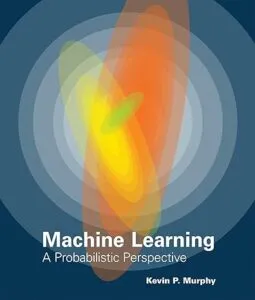
Machine Learning: A Probabilistic Perspective – Kevin P. Murphy
Murphy’s book is a masterpiece for mathematically inclined learners. It approaches machine learning from a Bayesian viewpoint, showing how probability shapes every decision algorithms make.
While dense, it rewards patience with deep insights into why uncertainty is central to intelligent systems. For those planning to move into research or advanced data science, this book offers both the foundation and the philosophy to think probabilistically about every ML challenge.
Machine Learning: A Probabilistic Perspective (Adaptive Computation and Machine Learning series)
$96.22
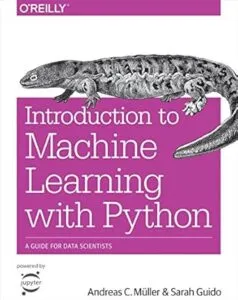
Introduction to Machine Learning with Python – Andreas Müller & Sarah Guido
Müller and Guido take a friendly, pragmatic approach to building models using scikit-learn. Their book emphasizes hands-on experimentation, making it ideal for beginners who learn best through coding.
Each chapter gently escalates from basic classification tasks to more sophisticated pipelines, encouraging readers to tweak, test, and iterate. By the end, you’ll not only know how to use the tools but also how to evaluate models responsibly, avoiding the traps that many newcomers fall into.
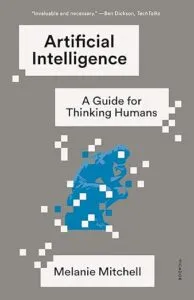
Artificial Intelligence: A Guide for Thinking Humans – Melanie Mitchell
While most books focus on technical skills, Mitchell’s Artificial Intelligence: A Guide for Thinking Humans explores the philosophical and ethical dimensions of AI. It helps readers grasp what intelligence really means, both artificial and human.
Through relatable examples and storytelling, Mitchell examines the promises and pitfalls of machine learning in society. It’s an essential reminder that as we build smarter machines, we must also become wiser humans. For any beginner, it offers perspective, grounding the excitement of technology in thoughtful reflection.
Turning Pages Into Progress: How Learning Machine Learning Today Builds Tomorrow’s Innovators
Each of these ten books is more than just a guide to algorithms, it’s an invitation to explore a new way of thinking. They teach you how to learn from data, recognize patterns, and approach problems with analytical creativity. Whether you start with an introductory guide or dive into neural networks, your journey through machine learning books will unlock more than technical skills; it will reshape the way you perceive intelligence, progress, and potential.
At Generate Future Leads, we’re passionate about empowering learners, creators, and professionals to harness knowledge that drives real-world change. Machine learning is not just a career path; it’s a mindset, one that embraces experimentation, curiosity, and continuous growth.
So, as you close this article and open your next book, ask yourself:
What could you build if you truly understood how machines learn?
Your answer might just define the future you create.
You may also like

How the Fed Moves Markets: Decisions That Shape the World When the Fed Sets the...
Read More